Showing posts with label Dictionary Project. Show all posts

Thursday, December 13, 2012

A is for Ameliorate

I love this word, ameliorate. It has a very pleasant, ameliorating tone, and it reminds me of one of the first words I learned in Latin class in the 9th grade. It is the comparative of the adjective bonus (-a, -um), which means good. Melior means better (mejor in Spanish).
Melior
Our daughter Bonnie’s name comes from the Latin root bonus (-a, -um). In Latin, bonita means goodness, in Spanish, pretty.       

For you linguaphiles (Hank Dunham, call your office), here it is in its declensions. 
Number
Singular
Plural
Case \ Gender
M.F.
N.
MM.FF.
NN.


Ameliorate is sometimes confused with alleviate, but alleviate has to do with making a burden bearable, lessening the pain. Amelioration has to do with actually making things better. Ameliorators of the world, unite. Let’s make this world a better place! Tikkun olam!

Tuesday, February 01, 2011

What is a Cockle, Anyway?

So the other day I heard a rabbi talk about "the cockles of your soul." I think he was just trying to be different, because of course, the phrase is "warming the cockles of your heart." So naturally, my inward response was, "What in the world is a cockle, anyway?"


Well, notwithstanding some of the scurrilous definitions at Urban Dictionary (none of which come close to the real meaning of the phrase), it is a well worn idiom in English dating to at least the middle of the 17th century.


Quoting from the site World Wide Words: "Something that warms the cockles of one's heart induces a glow of pleasure, sympathy, affection, or some such similar emotion. What gets warmed is the innermost part of one's being. It's not that surprising that it should be associated with the heart, that being the presumed seat of the emotions for most people. But what are the cockles?"


One theory of its etymology is from the heart shape of certain bivalve mollusks, as pictured above. There are other theories, about which you can read here and here.

Sunday, December 27, 2009

A is for Allium

Aioli, Alioli, Aglio e Olio, Allium; it all spells garlic to me!
This post combines two of my favorite things: words and food.
It's been quite a while since I last wrote a post in my ongoing series on interesting words as I read through the dictionary. Here was the original idea.


This post arose from a discussion about the difference between aioli and alioli and which came first. It was the wonderfully gifted cooks in our family who began the discussion, but the word- and food-lover in me brought me into the discussion.

It seems that aïoli, French for garlic and oil, from the Provence region of France, contains egg, as well as garlic and oil. So, it is pale yellow and creamy, like mayonnaise. One of many uses for it is as a dip, for sliced, raw vegetables. More info here and here.


Alioli, on the other hand, a sauce from Spain and a word that came from the Catalan language (but ultimately from Latin "allium") contains no egg. Of course, as in many things regarding cooking, that is a matter of opinion, as one can see from this recipe for patatas alioli, one of our favorite Spanish tapas.


Add to this list a favorite from our sojourn in Italy, Aglio e Olio.


The English A-word for all this garlic wonderfulness is Allium, "a large genus of Liliaceous plants, of which garlic, the onion, leek, chive, shallot, and the British wild flower Ramsons are species," according to the OED [Latin: allium, garlic, of unkn. origin].

Finally, here's a great recipe for garlic bread, done in the style of one of our favorite Tokyo eateries, Ninnikuya.

Here's a fine recipe for crackers and roasted garlic hummus.
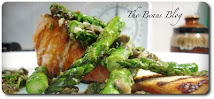
For (at last count) 26 mouth-watering recipes involving Garlic, check out the Beans Blog, our favorite food blog.


Finally, our friends sent us this picture, and although I don't completely understand it, I kind of like it!

Tuesday, July 21, 2009

A is for Appraise and Apprise

I hope this post will apprise you of the difference between apprise and appraise.

After reading it, you can appraise it (and apprise me of your conclusions, if you so desire).

The confusion in usage between apprise and appraise has come to my attention on numerous occasions on the radio and in person in recent days. This is my appraisal.

Interestingly, people often use appraise when they mean apprise.

I do not believe I've ever heard people use apprise when they mean appraise.

People never think to say, "the jeweler apprised the gem collection." They do say (incorrectly) "Johnny's mom appraised his teacher that little Johnny would not be in school on Tuesday."

A simple rule of thumb: You apprise people. You appraise things. You appraise things for people. You apprise people of your appraisal of things.

To appraise means to put a value on. If you appraise me, you are putting a price tag on me. That's not nice.

To apprise means to inform.

Below, some dictionaries apprise us of their appraisal of the two words.


ap·praise
tr.v. ap·praised, ap·prais·ing, ap·prais·es
1. To evaluate, especially in an official capacity.
2. To estimate the quality, amount, size, and other features of; judge.
[Middle English appreisen, possibly from Old French aprisier, from Late Latin appretire : Latin ad-, ad- + Latin pretium, price]
The American Heritage® Dictionary of the English Language, Fourth Edition copyright ©2000 by Houghton Mifflin Company

Origin: 1400–50; late ME apraysen to set a value on, prob. a conflation of aprisen to apprize and preisen to praise (with sense of prize)
Dictionary.com UnabridgedBased on the Random House Dictionary, © Random House, Inc. 2009

ap⋅prise
verb (used with object), -prised, -pris⋅ing.
to give notice to; inform; advise (often fol. by of): to be apprised of the death of an old friend.

Origin: 1685–95; appris taught, informed, ptp. of apprendre; see apprehend
[French apprendre, appris-, from Old French aprendre, to learn, from Latin apprehendere, apprēndere; see apprentice.]
The American Heritage® Dictionary of the English Language, Fourth EditionCopyright © 2009 by Houghton Mifflin Company.

Word Origin & History
apprise: "to notify," 1694, from Fr. appris, pp. of apprendre "to inform, teach," lit. "to lay hold of (in the mind)," another metaphoric meaning of L. apprehendere (see apprehend).
Online Etymology Dictionary, © 2001 Douglas Harper

Sunday, May 17, 2009

A is for Autodidact


The definition of autodidact in its very simplest form is "a self-taught person." This is the idea I have in mind of autodidacticism—a self-taught person.

We often think of an autodidact as one who has learned a subject without the benefit of a teacher or formal education, but it seems that on one level, we are all autodidacts. No matter how good the teacher, or rigorous the education, each of us must exert some effort, however slight, to allow learning to take place.

No matter how excellent the instructor, the student must actively listen in order to ingest, digest, remember, and use the information. If one is not interested in learning, the best teachers and the most expensive schools will not suffice.

On the other hand, if one is obsessed with learning, nothing will prevent that one from seeking out knowledge.
Much autodidacticism takes place through the medium of books, yet this is not strictly self-teaching. The author is a teacher in absentia. On the other hand, without the autodidact's effort in reading and understanding, no learning (and therefore no teaching) takes place.

For more on learning and teaching, see my previous post here.


Although I have had many fine teachers over the years, both in school and out, I consider myself an autodidact.

Have I sufficiently muddied the waters concerning the meaning of the word "autodidact"? If so, I have accomplished my purpose.
Seriously, though, I love the word, and so does Detective Robert Goren of Law and Order, Criminal Intent, who has used it on at least two or three shows that I've seen.

Etymology: [from Greek auto-, auto, self and didaktos, teaching]

Other forms: autodidactic, autodidactically

Related words: didactic, didacticism

Friday, May 15, 2009

A is for Amen

Recently someone made what he considered a clever comment about three English words known around the world—amen, hallelujah, and Coca-Cola. The ironic thing is that none of the three is really English. (Okay, I suppose we can consider the word Coca-Cola in its form as a trademark to be a native American English invention, but coca and cola themselves are simply transliterations from their original languages—Quechua and Temne respectively).

Amen
The American Heritage Dictionary of the English Language gives the etymology of amen as follows: [from Middle English from Old English from Late Latin from Greek from Hebrew]
The word passed through these languages virtually unchanged, simply transliterated in each case.


The original Hebrew word amen is part of a wonderful constellation of words having to do with truth (see my earlier entry)—or faithfulness. The word amen has been used in its untranslated form in virtually all of the world’s languages and thereby has blessed and enriched virtually all of the world’s peoples.

Hallelujah
This is another Hebrew word that has found its way around the world without translation. Although today it is commonly used as an exclamation or interjection used to express joy or praise, the original word is in fact an imperative, i.e. “praise the LORD” (the word LORD being an evasive synonym in English for the name of God after the pattern used in Hebrew). The word Hallelujah (and its unaspirated Greek form alleluia) are among the most popular words in western religious hymns and songs of praise.

Coca-Cola

Coca-Cola is not, strictly speaking, an English word either. Coca comes through Spanish from Quechua, from the dried leaves of the plant from which cocaine is extracted.

Cola, according to the American Heritage Dictionary, is either of two tropical African evergreen plants having nutlike seeds yielding an extract that contains caffeine and theobromine and is used in carbonated beverages and pharmaceuticals. Cola finds its origin in West Africa, possibly from the word kola (the kola nut) in the Temne language.

Thursday, May 07, 2009

A is for Avuncular and A Nuncle

All right, it's time for more exposition of my dictionary exploration. I know because of the thousands of emails and requests I've received to resume my dictionary writings. (Okay, not really, it's because I can't help it.) Although I haven't written anything recently, I am constantly delving into words and their origins. I thought I would write some of it up tonight.
Something today reminded me of the word "avuncular," which is personally relevant. It means "of or having to do with an uncle" or "similar to an uncle, especially in benevolence or tolerance." It comes from Latin avunculus. The word "uncle" itself derives from the same Latin word.


I, of course, knew the word avuncular, but as I began to research it, I found some other interesting terms. It turns out that in Latin, an avunculus actually only represents a maternal uncle. Avunculus apparently derives from avus (grandfather), so an avunculus is a "lesser grandfather." It doesn't take much imagination to see how avus could derive from Hebrew av (father). See my discussion of av and abba here.
A paternal uncle is a patruus (father's brother is a "second father" from pater, father).
A maternal aunt is known as a matertera in Latin (a second mother, from mater, mother). There is apparently an obscure English word, materteral, in the Oxford English dictionary (in 1823) which predates avuncular (1831), but it is rarely seen, whereas avuncular is in common usage. More on this here. A paternal aunt (father's sister) is called an amita.
That brings us to another concept I wrote about here—a process called false splitting or juncture loss. A chiefly British usage derived easily from the phrase "an uncle" into "a nuncle." The Bard himself used it as follows: "Can you make no use of nothing, nuncle?" —Shakespeare

Tuesday, February 17, 2009

A is for Apostrophe

Well, it's been over seven months since I last delved into the dictionary to dig up some tasty morsels (the word "delve" derives from a word meaning "dig," don't you know?), so perhaps it's appropriate that my first letter back represents a gap, something missing.
Although its (not it's) usage is very straightforward, it is (it's) one of the most misused marks of punctuation in the English language. There are some very entertaining web sites on the Internet concerning apostrophe usage.
There are two primary definitions of the word "apostrophe." The first is the aforementioned diacritical one to signify a gap, something missing, i.e. missing letters. It can also be used to show possession or form plurals.
The second definition of apostrophe is a rhetorical device in which an absent person or personified object is addressed. For example, "O death, where is your sting? O death, where is your victory?" or "Death, be not proud, though some have called thee / Mighty and dreadful, for thou art not so" or "O Captain, my Captain" or "O Apostrophe, half a Quote, and yet so much less!"
The etymology of the word "apostrophe" is from Greek through Latin, literally "the act of turning away."
ἀποστροφή
Here's the link to the dictionary definition:
http://www.thefreedictionary.com/apostrophe

Tuesday, July 08, 2008

A is for Amateur

Amateur is often used in a negative context in English—a rank amateur, an amateurish production. Yet from the etymology, amateurs love what they do. From Latin amator (lover) through French amateur (lover) to English, ultimately from Latin amare (to love), the amateur is not remunerated for what she does, but does it out of love, a devotee.

Although the word professional is often used to signify an expert and amateur a dilettante, a tyro, many amateurs have achieved great heights in their loved avocations. Bobby Jones, for example, was one of the greatest golfers of all time yet never played professionally. At one time Olympic athletes were all amateurs, but their level of expertise is world class.

Speaking of amateurs who are world class, Longmont, Colorado, boasts one of the top amateur symphony orchestras in the country. The Longmont Symphony Orchestra performs throughout the year, including the annual Fireworks Display at Thornton (see my Independence Day post below).

Our friend, Deb, plays viola for the Longmont Symphony Orchestra, for the Razumovsky String Quartet, and for the MahlerFest orchestra. She gives private lessons and teaches music appreciation and theory at the University of Colorado. She shares the richness of music with the community in innumerable ways. It was in her Music Appreciation class in 1999 that I was introduced to opera, and my wife and I have been hooked on opera ever since. I did a post on our annual Central City Opera House summer festival trip last year here.

Orig: 7/8/08

Sunday, June 22, 2008

A is for Antipodes

The first time I heard the word antipodes was in a class during my naval career. The word was mispronounced by the person who used it (and didn’t know what it meant). Everyone turned to me since I was known for an obsession with words. I had never heard it, but naturally had a dictionary close at hand and looked it up. We found out the proper pronunciation does not rhyme with Shanty Codes but rather with Euripides, putting the accent on the second syllable, i.e. an-TIP-uh-deez. The definition of the word is “any two places that are situated diametrically opposite one another on the earth's surface.” From Greek through Latin, the word means literally “the feet opposite.” So the people at the antipodes (on the other side of the earth) have their feet opposite us.

The Antipodes, when used as a proper noun, refers to Australia and New Zealand since they have their feet diametrically opposite to the people of England. British sailors apparently coined the word in the 19th century. (
Note: Strictly speaking Australia and New Zealand are not at the exact antipodes of Great Britain. Wikepedia has an interesting map and article here.)

The word antipodes can also refer to “the exact opposite or contrary of something” (as can antipode, a word coined by back-formation from antipodes).


Antipodes reminds me of a related "pod" word, tetrapod. Literally meaning "four feet," some 10,000 tetrapods were used in the construction of the Rota Naval Station. Carefully placed to provide a seawall to protect a large artificial harbor entrance, the tetrapod became the station's symbol. We were stationed in Rota for a total of 10 wonderful years.

The picture below is from the Stars and Stripes newspaper from April 26, 2006.


Ted Rohde ©Stars and Stripes
Rota, Spain, September 9, 1957: Huge concrete tetrapods are piled up on the beach at Rota, site of a new U.S.-Spanish naval base. The French-designed tetrapods, weighing between 8 and 25 tons each, were used to break up wave action and absorb the ocean's eroding energy.


For more information on the Rota Naval Station, check out the website here. (Warning to my family: don't spend too much time on this site. You'll get homesick!) (Note: The main Naval Station site seems to be down for some reason. I have substituted another web site.)

Saturday, June 21, 2008

A is for Australia

"Tempus fugit," as the ancient Italians were wont to say!

It has been over a week since my last post, so here goes:

Australia is a very special country to us because:


1) It's a very special country. Check out the official travel and tourism site here.

2) Australians have always been faithful friends and allies of our country. See my previous post here.
3) Our daughter lives there with her husband (who is from Australia) and their two children, as well as her husband's family, who have become very dear to us.
4) My mother had an uncle who immigrated to Australia and lived near Melbourne. We still have cousins there.
5) The unique flora and fauna that exist on this island continent and nowhere else in the world (otherwise, they wouldn't be unique flora and fauna. Duh!). For further info, check out this article and this article.
6) Infinitely many other reasons for which neither time nor space avail (obviously, since they're infinitely many!). Wikipedia is always a good place to start Internet exploration.
Getting back to the linguistics of the word (which is, after all, my purpose for going through the dictionary from A to Zed--have to say Zed, since I'm writing about Australia. Interestingly, though, it seems only in the U.S. do we name the last letter of the alphabet "Zee." Seems everyone else in the world says "Zed." You truly do learn quite a few new things every day!)
Terra australis incognita (literally, unknown southern land) was a phrase describing a southern land of legends going back at least as far as ancient Rome. Seems the land wasn't legendary, though! It just hadn't been discovered by the denizens of the northern hemisphere yet.
When I was a lad, my family in Ohio observed the Aurora Borealis (Northern Lights) on a few occasions. It's not something you forget. The Aurora Australis are the corresponding Southern Lights. For some amazing sights of Auroras (or Aurorae), both Southern and Northern, check out Youtube here.
The Australian flag also reflects Australia's southern location. The constellation represented on the right-hand side of the flag is the Southern Cross (Crux Australis).


More on Australia.

Wednesday, June 11, 2008

A is for Alpaca


An alpaca is a domesticated South American mammal, related to the llama and having fine, long wool. It is one of four New World camelids (the family to which camels belong). Alpaca derives from the Aymara language (yeah, if you want more information about that language, follow the link. It is one of only a few native American languages with over a million speakers—actually, Aymara has over two million). The word camel goes all the way back to the Hebrew gamal.


The alpaca is closely related to (in fact, descended from) the vicuña. Here's a picture of these wild animals, who inhabit the high Andes. The word vicuña comes from the Quechua, the language of the ancient Inca empire, which is spoken to this day by over eight million people in six south American countries.


The paco vicuña is a cross between the gentle, domesticated alpaca and the wild vicuña. The fiber from the paco vicuña is of such high quality and so expensive that it was once reserved for Incan royalty. For more information about the paco vicuña, check out this article.


The llama is the best known of the South American camelids. There is a cute story about how the llama got its name. I originally read it in the book Native Tongues by Charles Berlitz. The story goes that when the Spaniards first came to South America and encountered the llama, they asked what it was called (in Spanish “¿Como se llama?”) Supposedly, the natives were confused and repeated the word llama over and over, convincing the questioners that the creature was called a llama!

Whether or not I like this story is immaterial. It seems that the story is apocryphal. Apparently, the Quechua word for llama is a word that sounds like—you guessed it—llama. So when the Spaniards asked the natives “¿Como se llama?” obviously asking what the animal was called, the natives responded, “Llama”!


Speaking of “what is this called” gives me an excuse to write about names and naming. We often think of names as arbitrary labels stuck on things to identify them. In fact, names are often closely associated with the inherent characteristics of the thing named. In Hebrew the phrase we translate “to name” is literally “to call its (his or her) name.” The naming of the animals was the assignment of a Hebrew word reflecting the basic nature of each animal. It wasn’t that the name was an arbitrary designation given by Adam but that Adam called the name (i.e. identified the name) of each animal.

Moreover, when reading about the naming of people in scripture, we find that the process of naming is one of calling into being the inherent nature or character of an individual, either in consonance with an event associated with the birth or as a prayer or prophecy of the future of the individual. In many cultures, names are carefully chosen to provide the maximum possibility of a good and prosperous future.
These are just a few thoughts about naming, a subject about which volumes could be (and have been) written. For just one, check out Marcia Prager's wonderful book The Path of Blessing.

The fourth, lesser known, and wild South American camelid is the guanaco. The name derives from a similar word in Quechua.


A year ago, I posted a little recap of our visit to the Estes Park Wool Market, which we visited last year with our daughter, Hannah. It was a fascinating day. You can read about it here. Over the course of the past year, I have noticed that I receive many hits from people looking for information and/or pictures of the South American camelids. That had something to do with my choosing alpaca as a word to highlight, but also I just think these animals are the most fascinating creatures.
Incidentally, there is still time to make it to the 2008 iteration of the Estes Park Wool Market, which is being held this weekend, June 14-15, 2008.

Monday, June 02, 2008

A is for a Nadder

The word adder brings me to a class of words that I find quite interesting. They illustrate how languages evolve, not only through growth but by corruption and deterioration. For example, the original form of the word adder in the Old English was a nædre. In Middle English a naddre became an addre. Once used generically for any snake, its meaning has been narrowed to a particular type of serpent.

Other words in this class formed by a process known as false splitting or juncture loss are apron (a napron from Old French naperon), umpire (from Middle English a noumper, originally French noumpere), and orange (see the dictionary entry for the fascinating story of how this word came to us from Dravidian through Sanskrit, Persian, Italian, and French through a similar process of false splitting).

Examples of false splitting occur in the opposite direction as well. A nickname derives from an eke name, which was "an additional name" in Middle English.

A newt comes to us from an eute in Middle English being mistaken for a neute.


Apparently the opposite of a billy goat originally was an anny goat, which became a nanny goat, whether through the process of false splitting or because nanny is a nickname (an eke name) for Anne.
Orig: 6/2/08

A is for Anti- but also Ante-

Another one of those building blocks that we use to form words in English is the prefix "anti-". I think most of us know that it means opposite or against. We have many examples: antiaging, antidisestablishmentarianism (sorry, couldn't resist!), antifreeze, anti-inflammatory, antipathy, antipodes (we'll explore this one later), and many more.
There's a second ante-, usually pronounced the same as the first anti-, but its meaning is entirely different. Ante- means "prior to, earlier, in front of , before." Some examples:

antebellum——before the war
antecedent——something that goes before
antediluvian——before the flood
ante meridian——before noon (A.M.)
antemortem——preceding death
antenatal ——before birth
antepenultimate——before the next to the last

Note: Although the anti-/ante- difference usually holds, there are a very few cases in which the before (i.e. ante-) prefix becomes anti- in English, for example anticipate and antipasto (which is not "against the meal" but "before the meal"). I used to think antipasto meant before the pasta, and I always wondered why the "a" in pasta was changed to an "o" in antipasto. It turns out that the pasto root means meal or food. Of course, the first course of an Italian meal often consists of pasta, so technically I guess antipasto is before the pasta, too! Excellent. Mangia! Mangia!

Orig: 6/2/08

Sunday, June 01, 2008

A is for Adit

All of you crossword puzzlers (cruciverbalists) out there will know this word for a mine entrance—adit—because it's a fine crossword building block—two common consonants that work as a first, last or middle letter and two vowels. It fits nicely into a crossword puzzle.
If you don't do crosswords, you may never have run across this word. You're welcome!
(I found out from my trusty dictionary that the word adit means specifically "an almost horizontal mine entrance" and that it comes from the Latin aditus, access, past participle of adire, to approach from ad, to, toward and ire, to go.)
Trivial side note: Ad was one of the first words we learned in first-year Latin. We learned it as "ad with the accusative," indicating the case for the object of the preposition. The prefix ad- in English is one of those useful "bits and pieces" that help us figure out the meaning of a word when no dictionary is handy (heaven forbid that should happen very often!).
Orig: 6/1/08

Sunday, May 18, 2008

A is for Accumulate

Do you ever think of clouds when you think of the word accumulate or accumulation? I didn't either until I read the etymology of the words. It seems they derive from a Latin root cumulus, meaning a heap or pile. Those puffy clouds we call cumulus come from an accumulation of moisture overhead, forming a beautiful heap in the sky. It seems that even in English the word cumulus can mean a pile or a heap, as well as clouds piled high.
Incidentally, knowing the derivation of accumulate means never having to misspell the word. If you know how to spell cumulus, you will never have to wonder how many m's or l's accumulate in the word. Just remember to double the initial c because of the prefix.

For more basic information on clouds, check out this site.
Orig: 5/18/08

Saturday, May 17, 2008

A is for Aardvark and Aardwolf

Before reading halfway through the first page of my dictionary, I came across an etymology of a not uncommon word from an uncommon language and a word with which I was unfamiliar. We all know of the aardvark, also commonly known as an anteater. I didn't realize the etymology was from the Afrikaans language, a close relative of Dutch. Aard means earth, and vark is from varken, which is pig (it's just a short linguistic leap from Afrikaans/Dutch varken to English pork), making the aardvark an earth pig. Here's a picture of the porcine creature.


In the same entry, I read of another interesting African animal called an aardwolf, a hyena-like mammal. Unlike the hyena, though, the aardwolf is insectivorous, subsisting on a diet almost entirely of insects.


Orig: 5/17/08

Thursday, May 15, 2008

A is for Abstemious and Its Vowels A E I O U

Not to be facetious, but whenever I come across the word abstemious I am reminded of the only two commonly used words in the English language with all five vowels in order (if one makes them into adverbs with the addition of -ly, one has six vowels in order).

Now these are not the only two words in the English language with all the vowels in order, just the only two words in common, contemporary usage. In fact, some word lovers with nothing better to do have found dozens of such words, but you and I have never heard of them. (For much more than you ever wanted to know on this subject, check out this site.)

You can even find the vowels in order in that euphonic but phony word supercalifragilisticexpialidocious (with quite a few extraneous vowels thrown in, to be sure).

Abstemious derives from Latin ab- (away from) and temum (liquor). One who is abstemious is sparing or moderate in eating and drinking.

For some related sports trivia, can you identify the baseball player whose name contains all the vowels? He played for a number of teams, most notably the Detroit Tigers in the 70s. His name is Aurelio Rodriguez.

By the way, did you know that the vowels represent life? How? Well, the vowels represent breath—breath flowing freely without obstruction. (The consonants obstruct the breath with various parts of the mouth.) Since human life cannot exist without breath, vowels represent our life. "He blew into his nostrils the breath of life, and the adam became a living being."

Orig: 5/15/08

Tuesday, May 13, 2008

A is for Absquatulate

ABSQUATULATE

The effect of the Latin language on the English language is immediately apparent when reading the first pages of the dictionary. It is perhaps appropriate, then, that my first word, absquatulate, is a Mock Latinate form. In other words it is an English word formed from a Latin prefix (ab-, from) and suffix (-ate, to act upon in a specified way) with a non-existent root (squatul-, probably related to the word squat). For more on this interesting word, check here.
Orig: 5/13/08

A is for Ab Initio

To tell this story ab initio (from the beginning) I have to take you back to the time before I first went to school. I wanted to be an abecedarian. Of course, I didn't know that word back then. I just kept asking my mother when they would teach me the alphabet. When would I learn to read?

Words became my life. Thirty or more years ago, I began to study words on a systematic basis, writing down definitions and etymologies, not only of unfamiliar words but of familiar words for which I could not give a quick definition and derivation.

I guess it had to come to this eventually.

I am reading the dictionary!


Some will find that funny.

It's probably more accurate to say I'm studying the dictionary, perusing the dictionary, skimming some parts, focusing on others.

The idea may have grown from a book my niece gave me called The Know-It-All, One Man's Humble Quest to be the Smartest Person in the World. This guy set out to read the Encyclopedia Britannica in an attempt to prepare for a possible appearance on Jeopardy. He then wrote a book highlighting various interesting things he had learned on his quest.


Much of my life has revolved around learning words, looking up words, researching words, studying words. I thought: Why not do it in a systematic way? Why not start at the beginning and go to the end, from Alef to Tav, from soup to nuts, ab initio to finis?

So yesterday I started. I will be looking for unusual words, interesting words. I will of course be looking at etymologies, which are my passion. I will be highlighting the many different languages from which English derives.

I have chosen The American Heritage Dictionary of the English Language as my text, for a number of reasons. For one thing, I am most familiar with this dictionary. It has been my constant companion for many years. I like that it is more prescriptive than other dictionaries. In others words, it does not immediately acquiesce to popular usage. No matter how many people say "ain't," for example, it still considers the locution "nonstandard." That noxious pronunciation of nuclear popularized by Jimmy Carter, although accepted by other dictionaries, is still considered an incorrect pronunciation (which by any reasonable standard, it is).


Also, and perhaps even more importantly, The American Heritage Dictionary gives excellent etymologies for most words, whereas not all other dictionaries do.

Check back to my blog occasionally as I make my way alphabetically through the English language. It will be a verbal adventure.
Orig: 5/13/08