Showing posts with label Hebrew. Show all posts
Showing posts with label Hebrew. Show all posts
Thursday, September 26, 2013


Sunday, July 15, 2012
I'm Sixty!
Tengo sesenta años. I am sixty years old. Literally, I have sixty years. If I have sixty years, they have been given to me. I didn’t take them. They were given to me. The breaths. The wonders. The miracles. They are a gift—a gift for which I am very thankful.
私は六十歳です。(Watashi-wa roku-ju nen desu.) In Japan, the 60th birthday is the occasion of kanreki, when five cycles of the Chinese zodiac have completed, and the person is said to be reborn. During kanreki, the birthday person has a party with a cake decorated with white cranes and red turtles. The white cranes are a symbol of 1,000 years, and the red turtle represents 10,000 years. A sleeveless red jacket is given to the 60-year old, representing a baby's jacket and a return to the beginning of life.
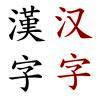
我六十岁。(Wǒ lìu shí suì.) In Chinese culture, the 60th birthday is a landmark life event and worthy of celebration. The Chinese consider the age of 60 to be the completion of one life cycle. Those who achieve the plateau of 60 years begin a new life cycle at that point. Traditionally, a 60th birthday party is a major occasion in Chinese culture. Parties often take place in restaurants, preceded by games of mahjong before everyone sits down to enjoy the birthday meal. An appropriate menu must include noodles, which represent a long life. (Does spaghetti alio e olio count?)
בן־ששים שנה (Ben shishim shanah.) In Hebrew, my age is stated as “a son of sixty years.” Birthdays are not universally celebrated in Judaism. It is more common to mark the yahrzeit or anniversary of the date of a person’s death, which I understand to be a remembrance of the legacy of that person and a celebration of his or her life.
No matter which language one uses to express the age of 60, it is still six decades, three score, six times ten, five times twelve. It still comes after 59 and before 61. In our youth-oriented society, it is common to play down one’s age. Jack Benny always claimed to be 39. “Sixty is the new forty.” “You’re only as old as you feel, look, think, eat, etc.”
Everyone wants to be young, but wisdom comes with age. An accumulation of marvelous experiences only comes with time.
I have no intention of downplaying the age to which I have attained. I have been given sesenta años. I am a son of shishim shanah. I am blessed and thankful for those years. I have lived and continue to enjoy a wonderful life with an excellent wife, loving family and friends, and uncountable blessings.
I was once asked why I didn’t dye my hair when it started to turn gray. I replied, “It took me 50 years to grow these gray hairs, and I’m not going to hide them.” In Proverbs it says this: “Gray hair is a crown of splendor; it is attained in the way of righteousness.”
I’m sixty, and I couldn’t be happier about it.

Tuesday, July 10, 2012
Happy Anniversary, Ellie and Ryan
Happy anniversary, Ellie and Ryan.
Here you are thirteen years ago.

Thirteen, the number of ahavah (love) in Hebrew.

"Therefore shall a man leave his father and his mother, and shall cleave unto his wife: and they shall be one (echad) flesh."
Thirteen, also the number of echad (one) in Hebrew.

In your living room, you have a framed picture of this beautiful kanji (megumi), which means blessing, grace, mercy, kindness. Your marriage is a great blessing. Your home is filled with grace, mercy, and kindness.

It can be seen in the two of you and in the three wonderful boys you are raising. The four lower strokes of the kanji mean "heart." You take people into your heart as a way of life.

As you follow God together, you bring light and life into this world. We commend you for that. We love you and wish you many more years together.

Wednesday, February 29, 2012
Happy Intercalation Day 2012

Today is the day we intercalate, i.e. interpolate or insert, a day in the 365-day solar calendar. This is necessary because the revolution of the earth around the sun takes slightly longer than 365 days, and every few years, we have to "reset" the calendar.

The extra, intercalary day is commonly called a leap day and consequently, the year a leap year. It occurs every fourth year, if and only if the year is evenly divisible by four but not by 100 (unless it is also evenly divisible by 400)!

Other calendars insert leap days, weeks, or months. The Hebrew calendar, for example, is a luni-solar calendar and inserts an intercalary (or embolismic) month 7 out of every 19 years (based on the Metonic Cycle). A leap year in Hebrew is called Shanah Me'uberet (pronounced shah-NAH meh-oo-BEH-reht), literally "a pregnant year." This is necessary to realign the lunar year and the solar year so that the biblical holidays remain in their proper seasons.

Friday, January 13, 2012
So. It's Friday the 13th. So, what?
Friday the 13th. Big deal. The day and the number have gotten a bad rap for a long time. Yet Friday is beloved as the end of the work week, and do not Christians believe an event of universe-shattering proportions took place on Good Friday?

We have dealt previously with the number 13 here and here. Far from being unlucky, it has many praiseworthy qualities and connections.
One is in its connection to the Hebrew word love, ahavah, which has the numeric value of 13.

The word echad, one, also has the value of 13. It is said this alludes to the 13 attributes of God's compassion revealed to Moshe.

The United States had its original 13 colonies.

Our flag has 13 stripes.

Furthermore, it is said that "God is one" and "God is love," and adding the numeric values of ahavah and echad, we come up with 26, which happens to be the number of the Tetragrammaton, the ineffable Name of God.
I think those things are pretty good—lucky, you might say.
Lucky 13.

There are many 13s on the Dollar Bill, for example the stars...

...the stripes...

...the arrows...

...the leaves-berries...
 ...the letters (of Annuit Coeptis)...


...and the rattlers, among others.
For a plethora of interesting mathematical facts about the fascinating number 13, check out this site.
Monday, November 21, 2011
Boutique Judaica
Editor's Note (09-30-2013): Sadly, for those of us who loved this shop and the people who owned and operated it, Boutique Judaica is now closed for good, sold to another business. Thus this post now goes into the nostalgia file.
Boutique Judaica, just west of I-25 on Hampden Avenue, is one of our favorite shops in the Denver area. 

A look in the front window provides a glimpse of the myriad of items inside. Books, Kippot, Hanukkiot, Greeting Cards, Challah Plates and Covers, Shabbat Candlesticks, B'nai Mitzvah Gifts, Mezuzot, Tallitot, Fine Jewelry, Candles, Music CD's.
You name it.
You name it.

The appeal is not just the cornucopia of wonderful merchandise they stock.

It's the warmth and friendliness with which every visitor is welcomed. If you need to hear a good word, visit Boutique Judaica. You'll be treated like family. Here's Roz, showcasing a few of the items available.

Kathy stands by the front window display, chock full of Hanukkiot for the fast-approaching holiday.
 Boutique Judaica
Monday - Thursday: 10:30 - 6
Friday: 10:30 - 3
Sunday: 10:30 - 4
Closed Saturday (Shabbat)
Location:
5052 E. Hampden
Denver, CO 80222
If coming from I-25, watch for the Starbucks on the corner and turn left into the Happy Canyon Shopping Center. You'll see Boutique Judaica on your left.
Directions here.
Phone:
(303) 757-1317 Fax: (303) 757-1326
Friday, May 13, 2011
13 is a Lovely Number!

If 13 is an unlucky number, why is the great "Love" chapter of the Christian scriptures 1 Corinthians 13 and its 13 verses?!
By the way, the numeric value of the Hebrew word for Love (Ahavah) is 13.
1 If I speak in the tongues of men and of angels, but have not love, I am a noisy gong or a clanging cymbal.
2 And if I have prophetic powers, and understand all mysteries and all knowledge, and if I have all faith, so as to remove mountains, but have not love, I am nothing.
3 If I give away all I have, and if I deliver up my body to be burned, but have not love, I gain nothing.
4 Love is patient and kind; love does not envy or boast; it is not arrogant
5 or rude. It does not insist on its own way; it is not irritable or resentful;
6 it does not rejoice at wrongdoing, but rejoices with the truth.
7 Love bears all things, believes all things, hopes all things, endures all things.
8 Love never ends. As for prophecies, they will pass away; as for tongues, they will cease; as for knowledge, it will pass away.
9 For we know in part and we prophesy in part,
10 but when the perfect comes, the partial will pass away.
11 When I was a child, I spoke like a child, I thought like a child, I reasoned like a child. When I became a man, I gave up childish ways.
12 For now we see in a mirror dimly, but then face to face. Now I know in part; then I shall know fully, even as I have been fully known.
13 So now faith, hope, and love abide, these three; but the greatest of these is love.
1 Corinthians 13
By the way, the numeric value of the Hebrew word for Love (Ahavah) is 13.
1 If I speak in the tongues of men and of angels, but have not love, I am a noisy gong or a clanging cymbal.
2 And if I have prophetic powers, and understand all mysteries and all knowledge, and if I have all faith, so as to remove mountains, but have not love, I am nothing.
3 If I give away all I have, and if I deliver up my body to be burned, but have not love, I gain nothing.
4 Love is patient and kind; love does not envy or boast; it is not arrogant
5 or rude. It does not insist on its own way; it is not irritable or resentful;
6 it does not rejoice at wrongdoing, but rejoices with the truth.
7 Love bears all things, believes all things, hopes all things, endures all things.
8 Love never ends. As for prophecies, they will pass away; as for tongues, they will cease; as for knowledge, it will pass away.
9 For we know in part and we prophesy in part,
10 but when the perfect comes, the partial will pass away.
11 When I was a child, I spoke like a child, I thought like a child, I reasoned like a child. When I became a man, I gave up childish ways.
12 For now we see in a mirror dimly, but then face to face. Now I know in part; then I shall know fully, even as I have been fully known.
13 So now faith, hope, and love abide, these three; but the greatest of these is love.
1 Corinthians 13
Friday, May 15, 2009
A is for Amen
Recently someone made what he considered a clever comment about three English words known around the world—amen, hallelujah, and Coca-Cola. The ironic thing is that none of the three is really English. (Okay, I suppose we can consider the word Coca-Cola in its form as a trademark to be a native American English invention, but coca and cola themselves are simply transliterations from their original languages—Quechua and Temne respectively).
Amen
The American Heritage Dictionary of the English Language gives the etymology of amen as follows: [from Middle English from Old English from Late Latin from Greek from Hebrew] The word passed through these languages virtually unchanged, simply transliterated in each case.
Amen
The American Heritage Dictionary of the English Language gives the etymology of amen as follows: [from Middle English from Old English from Late Latin from Greek from Hebrew] The word passed through these languages virtually unchanged, simply transliterated in each case.
Hallelujah
This is another Hebrew word that has found its way around the world without translation. Although today it is commonly used as an exclamation or interjection used to express joy or praise, the original word is in fact an imperative, i.e. “praise the LORD” (the word LORD being an evasive synonym in English for the name of God after the pattern used in Hebrew). The word Hallelujah (and its unaspirated Greek form alleluia) are among the most popular words in western religious hymns and songs of praise.
Coca-Cola
Coca-Cola is not, strictly speaking, an English word either. Coca comes through Spanish from Quechua, from the dried leaves of the plant from which cocaine is extracted.
Cola, according to the American Heritage Dictionary, is either of two tropical African evergreen plants having nutlike seeds yielding an extract that contains caffeine and theobromine and is used in carbonated beverages and pharmaceuticals. Cola finds its origin in West Africa, possibly from the word kola (the kola nut) in the Temne language.

Saturday, March 07, 2009
Emet
THOUGHT FOR TODAY
It is one thing
to show a man
that he is in error,
and another
to put him
in possession
of the truth.
-John Locke,
philosopher
(1632-1704)
How much time do we spend criticizing error as opposed to teaching and exemplifying the truth?
What if every time I was moved to point out error I found a way to point out the truth?
The problem with focusing on error is that it focuses on error.
The beauty of revealing the truth is that it reveals the beauty of truth!
Should we not focus on the truth?

The word for truth in Hebrew (Emet) is spelled Alef Mem Tav, as in the picture above.
Alef is the first letter of the Alefbet.
Tav is the final letter.
Mem is the middle letter (including final forms).
Truth fills Space-Time from beginning to end and everything in between!
Error has not overcome it, so why focus on it?
The "Thought for Today" by John Locke came from an email newsletter called "A Word A Day" from the folks at Wordsmith.org. You can subscribe or just browse their site by clicking below.

Thursday, February 12, 2009
My Raison d'être

It is probably presumptuous to talk about any person having only one raison d'être (reason for being). We each have many facets, many raisons d'être, if you will, as does our Creator (who has infinitely many facets).
Nevertheless, most of my adult life seems to have revolved around learning and teaching. Learning in order to teach. Teaching and thereby being taught. Learning by teaching. Teaching while learning because something inside will not let me not share with others what I learn and what I love.
It is enlightening that in Hebrew, the letter Lamed has inherent within it both meanings—learn and teach.
The following link is an article entitled "I Learn, Therefore I Teach." When I first read the title, I thought, "I could have written this."
Friday, January 11, 2008
A is for Abba
When I started this series about words, I promised to highlight "the many languages from which English derives," but so far it seems the only other language I've highlighted is Latin. The word abba goes all the way back through Latin and Greek to the Aramaic and Hebrew. It derives ultimately from one of the simplest words in one of the world's oldest languages, ancient Hebrew. The root of abba is av, the Hebrew word for father. I say it is one of the simplest words in the world because it is formed from just two letters, and those two are the first two letters of the Hebrew alefbet, which evolved into the first two letters of the other western alphabets.

The word abba in modern Hebrew is an affectionate term for father. It is formed by adding an additional alef to the end of av. Anciently, in Aramaic it seems to have had a slightly more formal connotation.

The word abba comes to us in English through the Greek of the gospels and the letters of Paul, and it is currently defined as "a title of honor for bishops and patriarchs in some Christian churches of Egypt, Syria, and Ethiopia."
The English word abbot (the superior of a monastery) follows a similar etymological path back to abba and av. At some point in this series, I would like to discuss the alphabet and the inherent meanings of the individual letters, but for now—enough.
Here is a link to a very nice story about one Abba and his family.
Orig: 6/3/08
Friday, November 23, 2007
A Turkey By Any Other Name
 The following is an article I wrote some years ago on Thanksgiving that may be of interest:
Thanksgiving Day 2004
Dear Family and Friends,
The column that follows is my latest Hebrew "Word of the Week,” which I have been writing for a few months. Also, there's a "Rest of the Story" to this column relating to our family and its India connection. (Note for non-family: Kathy’s father and his five siblings grew up in India at a school in the Himalayas for missionary kids. Coincidentally, Kathy’s mother grew up at the same school, where she met Kathy’s father!)
Dear Family and Friends,
The column that follows is my latest Hebrew "Word of the Week,” which I have been writing for a few months. Also, there's a "Rest of the Story" to this column relating to our family and its India connection. (Note for non-family: Kathy’s father and his five siblings grew up in India at a school in the Himalayas for missionary kids. Coincidentally, Kathy’s mother grew up at the same school, where she met Kathy’s father!)
It seems that the meaning of Tarnegol Hodu in Hebrew is Indian Chicken. (Through a delightful coincidence the word Hodu also means "Give Thanks,” in addition to referring to the nation of India. Our Jewish friends eat turkey (Indian Chicken) during Purim in reference to King Ahasuerus, who reigned from India (Hodu) to Ethiopia (Cush) according to the first verse of the book of Esther.
Many languages use variations of the English word Turkey (we use the same word for the bird as for the country). Interestingly, in Turkey, turkey is called Hindi, which means "coming from India"! In Catalan, it is gall dindi or Indian cock. In Basque it is Indian hen. Many languages refer to turkey as Indian chicken, rooster, or hen. In Russian it is Indiuk and in Yiddish Indik (both relating to India). Danish, Dutch, and Finnish, among other languages, refer to the bird using the name of a town on the southern Indian coast (Danish kalkun).
Some languages go far afield of either Turkey or India. Portuguese calls the bird Peru, in reference to another country a world away. Standard Arabic makes reference to India, but two dialects call the bird "Ethiopian" or "Abyssinian" roosters. Malaysians call it "Dutch chicken." Finally, in Macedonian, the word for the bird is misir (the Turkish word for Egypt—Arabic for Egypt is Misr and Hebrew is Mitzrayim).
A few languages pay no attention to country. In Chinese, the term "fire chicken" may come from the red coloring around the face. Japanese shichimenchou means something like "seven-faced bird." This may make reference to the various colors reflected by the turkey’s wattle.
Spanish pavo comes from the incorrect association of the bird with the peacock (which could also be the source of the India connection. Pavo Cristatus is a large pheasant native to India.) It was our mistaken identity of the turkey as a type of Guinea fowl (and a belief that those birds originated in the country of Turkey) that led to our word for the bird.
Now that I have everyone thoroughly confused, let me mention one more delicious (!) irony. The turkey is a native North American bird, yet most languages of the world associate it with India. Seems a certain Italo-Spanish explorer made a similar mistake in the 15th century! So we have one more Native American designated with an Indian misnomer!
Having traveled around the world linguistically, let's get back to Hebrew and remember that Hodu also means "Give Thanks," so the next time some jokester casually wishes you a "Happy Turkey Day," remember that he or she is really saying “Happy Hodu Day” or "Happy Giving-Thanks Day!"
Hope this whets your appetite for a juicy bird this Thanksgiving—no matter what you call it! Happy Thanksgiving, Jim
QUOTE

Davar HaShavua
The Word of the Week
I love Thanksgiving. It is the one holiday set aside by our American forefathers (and foremothers!) to give thanks to the Creator for all the blessings bestowed upon us.The Word of the Week
 This week’s word is Hodu. Hodu in Hebrew means “Give thanks,” as in “Hodu L’Adonai Ki Tov Ki L’Olam Chasdo.” (Give thanks to the LORD for He is good; His Mercy is forever). (Psalm 107:1 among many other references.)
The root of Hodu is Yadah, meaning to praise, to give thanks (from the root Yad, hand). The word may have to do with throwing up the hands in praise and thanksgiving. The word itself holds an interesting lesson. It is spelled Yod Dalet Hei. The middle letter means “door,” and the outer two letters (Yod Hei) spell the shortened name of God (Yah). Thus thanksgiving (praise) is the door to the living God. Also, the meaning element of the letter Yod is "hand" and of Hei is "breath." Thus we enter the door of praise by using both hands and breath!
The final Thanksgiving lesson comes from our dear Hebrew teacher, Ori. She taught us that the word Hodu in Hebrew also means turkey! Ironically, a turkey is a Tarnegol Hodu or (Chicken of Giving Thanks)! One of the many things for which we can be thankful this Thanksgiving season is the Hebrew language, which holds so many delightful lessons for us. All for now.
Shavua Tov, Chaverim!END OF QUOTE
The final Thanksgiving lesson comes from our dear Hebrew teacher, Ori. She taught us that the word Hodu in Hebrew also means turkey! Ironically, a turkey is a Tarnegol Hodu or (Chicken of Giving Thanks)! One of the many things for which we can be thankful this Thanksgiving season is the Hebrew language, which holds so many delightful lessons for us. All for now.
Shavua Tov, Chaverim!END OF QUOTE
Subscribe to:
Posts (Atom)