Showing posts with label Greek. Show all posts

Thursday, September 23, 2010

Matsos Family Restaurant

Recently, I was home for my 40th High School Class Reunion, and some dear friends took me to one of their favorite restaurants in a nearby city, Wooster, Ohio. A Greek restaurant, Matsos offers a mouth-watering array of fine Greek cuisine, one of my favorite of all international culinary delights.

Matsos offers an amazing array of Greek favorites. I can vouch for the Spanakopita (which is a filling entrée, not an appetizer) and the souvlaki. My friend, Thorne, loves the Seafood Pizza. I've only been there once, but everything I saw looked and smelled great. Check the place out if ever in Wooster. The menu is here.
Here's another view of the front of the restaurant with Spiro Matsos, the owner.


An interesting sidelight is the owner's participation in a group called Ohio Light Opera. He has pictures of the group decorating the eatery's walls. Here he appears in costume for one of their productions.
For more on the Ohio Light Opera, check out their web site here.


Matsos Family Restaurant offers their delicious Greek dressings online at http://www.matsosgreekdressing.com/.
Thanks again, Thorne and Linda, for treating me at this great Ohio restaurant. Next time, I'll have the presence of mind to snap some photos of the food, which looked and tasted great!

Usage notes:
An entrée, although formerly a smaller course that precedes the main course, the term is now used to describe the main course itself, in which case what would otherwise be called the entrée is called the first course, appetizer or a starter.

Spanakopita (σπανακόπιτα, from σπανάκι, spanáki, spinach, and πίττα, pítta, pie) is a Greek spinach pie made with layers of phyllo and a filling of seasoned spinach, onions and scallions, feta, and sometimes eggs.

Sunday, May 17, 2009

A is for Autodidact


The definition of autodidact in its very simplest form is "a self-taught person." This is the idea I have in mind of autodidacticism—a self-taught person.

We often think of an autodidact as one who has learned a subject without the benefit of a teacher or formal education, but it seems that on one level, we are all autodidacts. No matter how good the teacher, or rigorous the education, each of us must exert some effort, however slight, to allow learning to take place.

No matter how excellent the instructor, the student must actively listen in order to ingest, digest, remember, and use the information. If one is not interested in learning, the best teachers and the most expensive schools will not suffice.

On the other hand, if one is obsessed with learning, nothing will prevent that one from seeking out knowledge.
Much autodidacticism takes place through the medium of books, yet this is not strictly self-teaching. The author is a teacher in absentia. On the other hand, without the autodidact's effort in reading and understanding, no learning (and therefore no teaching) takes place.

For more on learning and teaching, see my previous post here.


Although I have had many fine teachers over the years, both in school and out, I consider myself an autodidact.

Have I sufficiently muddied the waters concerning the meaning of the word "autodidact"? If so, I have accomplished my purpose.
Seriously, though, I love the word, and so does Detective Robert Goren of Law and Order, Criminal Intent, who has used it on at least two or three shows that I've seen.

Etymology: [from Greek auto-, auto, self and didaktos, teaching]

Other forms: autodidactic, autodidactically

Related words: didactic, didacticism

Friday, May 15, 2009

A is for Amen

Recently someone made what he considered a clever comment about three English words known around the world—amen, hallelujah, and Coca-Cola. The ironic thing is that none of the three is really English. (Okay, I suppose we can consider the word Coca-Cola in its form as a trademark to be a native American English invention, but coca and cola themselves are simply transliterations from their original languages—Quechua and Temne respectively).

Amen
The American Heritage Dictionary of the English Language gives the etymology of amen as follows: [from Middle English from Old English from Late Latin from Greek from Hebrew]
The word passed through these languages virtually unchanged, simply transliterated in each case.


The original Hebrew word amen is part of a wonderful constellation of words having to do with truth (see my earlier entry)—or faithfulness. The word amen has been used in its untranslated form in virtually all of the world’s languages and thereby has blessed and enriched virtually all of the world’s peoples.

Hallelujah
This is another Hebrew word that has found its way around the world without translation. Although today it is commonly used as an exclamation or interjection used to express joy or praise, the original word is in fact an imperative, i.e. “praise the LORD” (the word LORD being an evasive synonym in English for the name of God after the pattern used in Hebrew). The word Hallelujah (and its unaspirated Greek form alleluia) are among the most popular words in western religious hymns and songs of praise.

Coca-Cola

Coca-Cola is not, strictly speaking, an English word either. Coca comes through Spanish from Quechua, from the dried leaves of the plant from which cocaine is extracted.

Cola, according to the American Heritage Dictionary, is either of two tropical African evergreen plants having nutlike seeds yielding an extract that contains caffeine and theobromine and is used in carbonated beverages and pharmaceuticals. Cola finds its origin in West Africa, possibly from the word kola (the kola nut) in the Temne language.

Tuesday, February 17, 2009

A is for Apostrophe

Well, it's been over seven months since I last delved into the dictionary to dig up some tasty morsels (the word "delve" derives from a word meaning "dig," don't you know?), so perhaps it's appropriate that my first letter back represents a gap, something missing.
Although its (not it's) usage is very straightforward, it is (it's) one of the most misused marks of punctuation in the English language. There are some very entertaining web sites on the Internet concerning apostrophe usage.
There are two primary definitions of the word "apostrophe." The first is the aforementioned diacritical one to signify a gap, something missing, i.e. missing letters. It can also be used to show possession or form plurals.
The second definition of apostrophe is a rhetorical device in which an absent person or personified object is addressed. For example, "O death, where is your sting? O death, where is your victory?" or "Death, be not proud, though some have called thee / Mighty and dreadful, for thou art not so" or "O Captain, my Captain" or "O Apostrophe, half a Quote, and yet so much less!"
The etymology of the word "apostrophe" is from Greek through Latin, literally "the act of turning away."
ἀποστροφή
Here's the link to the dictionary definition:
http://www.thefreedictionary.com/apostrophe

Tuesday, June 12, 2007

My Son-in-Law Called Me a Polymath!

πολυμαθής

My son-in-law called me a Polymath!

…but that’s not a bad thing.


No, it’s actually quite a compliment...

You see a polymath has nothing to do with mathematics, or at least not completely. A polymath is learned in many subjects, one of which could be math (or maths outside North America).

The math component of the word confuses us. We associate it with “the science (or group of related sciences) dealing with the logic of quantity and shape and arrangement.”

…but etymologically, the word derives from a Greek word that simply means “to learn.”

The thing I loved most about being called a polymath is that, not only was it a new word for me, but more importantly, it came in an email entitled “New Word,” with the following text: “I came across a new word today, and not only did it remind me of you, you fit the definition of the word...polymath. You are undoubtedly a polymath…”

…and being excited about a new word is a very good thing, in my book.

Now, it’s a great compliment, indeed, to be called a polymath, but I think a lot of that just has to do with keeping my mouth shut about subjects I know little (of which there are a multitude) and spouting off about subjects I’ve studied (of which there are a few). When I do get interested in a subject, I pretty much obsess over it until I know as much as I can about it. I usually then like to tell others about it and will bore anyone within earshot as long as they’ll listen!

Polymaths are described as persons with encyclopedic, broad, or varied knowledge or learning. Synonyms are Renaissance man or Homo universalis in Latin, terms used to describe a person well educated, or who excels, in a wide variety of subjects or fields. With the proliferation of knowledge and the diversity of fields of study in today’s world, there is some question whether any modern person could be a true Renaissance man, in the classical sense of the word.

I am delighted that our sons-in-law, both of whom are extremely bright, capable, creative young men are interested in new words, as are our children. Words are the key to so many things. With them, we learn; we teach; we start, nurture, or restore relationships. We pray, we sing, we praise, we honor, we provide words of comfort and healing. We give of ourselves and receive from others by means of words. We create with words. The Word is among us, with us.
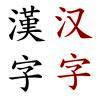

Of course, as soon as I learned this new word, courtesy of my son-in-law, I had to find out more about it, its etymology, its denotation and connotations. I learned of an interesting synonym, polyhistor, which is just as misleading as polymath. The word has nothing to do with history, but means one who is very learned or learned in many areas, just as does polymath.

A few lines of poetry from Thomas Moore deal with the erudite “polys” as follows:
“Off I fly, careering far
In chase of Pollys, prettier far
Than any of their namesakes are,
—The Polymaths and Polyhistors,
Polyglots and all their sisters."

The word is used rarely enough to find its way into dictionaries of rare or unusual words.

It is a delight, this polymath word, but a greater delight still is the person who sent it to me and all that the email represents.

My son-in-law called me a polymath!

…but that’s not a bad thing.

No, indeed…