Monday, May 19, 2008

A is for Aidan

I just spent a wonderful four days with Ellie and Ryan. I have a bunch of pictures. I'll start with the ones of Aidan and move on to the rest of the family tomorrow.

In this first one, we see Ellie and Jack with Spiderman, who is a special friend of Aidan.

He can fly, as demonstrated here!


Aidan loves to play with the hose in the backyard. Here he is getting a drink.

Here he is pretending it's raining!

Aidan in his golfing duds (knickers and golf shirt) ready to hit the links!


Aidan demonstrating his golf swing.


Standing on his head.


Aidan and Sabba at the airport.

My first post on this blog was in January of 2007, a picture of Aidan and me, which you can see here.

Orig: 5/19/08

Sunday, May 18, 2008

A is for Accumulate

Do you ever think of clouds when you think of the word accumulate or accumulation? I didn't either until I read the etymology of the words. It seems they derive from a Latin root cumulus, meaning a heap or pile. Those puffy clouds we call cumulus come from an accumulation of moisture overhead, forming a beautiful heap in the sky. It seems that even in English the word cumulus can mean a pile or a heap, as well as clouds piled high.
Incidentally, knowing the derivation of accumulate means never having to misspell the word. If you know how to spell cumulus, you will never have to wonder how many m's or l's accumulate in the word. Just remember to double the initial c because of the prefix.

For more basic information on clouds, check out this site.
Orig: 5/18/08

Saturday, May 17, 2008

A is for Aardvark and Aardwolf

Before reading halfway through the first page of my dictionary, I came across an etymology of a not uncommon word from an uncommon language and a word with which I was unfamiliar. We all know of the aardvark, also commonly known as an anteater. I didn't realize the etymology was from the Afrikaans language, a close relative of Dutch. Aard means earth, and vark is from varken, which is pig (it's just a short linguistic leap from Afrikaans/Dutch varken to English pork), making the aardvark an earth pig. Here's a picture of the porcine creature.


In the same entry, I read of another interesting African animal called an aardwolf, a hyena-like mammal. Unlike the hyena, though, the aardwolf is insectivorous, subsisting on a diet almost entirely of insects.


Orig: 5/17/08

Thursday, May 15, 2008

A is for Abstemious and Its Vowels A E I O U

Not to be facetious, but whenever I come across the word abstemious I am reminded of the only two commonly used words in the English language with all five vowels in order (if one makes them into adverbs with the addition of -ly, one has six vowels in order).

Now these are not the only two words in the English language with all the vowels in order, just the only two words in common, contemporary usage. In fact, some word lovers with nothing better to do have found dozens of such words, but you and I have never heard of them. (For much more than you ever wanted to know on this subject, check out this site.)

You can even find the vowels in order in that euphonic but phony word supercalifragilisticexpialidocious (with quite a few extraneous vowels thrown in, to be sure).

Abstemious derives from Latin ab- (away from) and temum (liquor). One who is abstemious is sparing or moderate in eating and drinking.

For some related sports trivia, can you identify the baseball player whose name contains all the vowels? He played for a number of teams, most notably the Detroit Tigers in the 70s. His name is Aurelio Rodriguez.

By the way, did you know that the vowels represent life? How? Well, the vowels represent breath—breath flowing freely without obstruction. (The consonants obstruct the breath with various parts of the mouth.) Since human life cannot exist without breath, vowels represent our life. "He blew into his nostrils the breath of life, and the adam became a living being."

Orig: 5/15/08

Tuesday, May 13, 2008

A is for Absquatulate

ABSQUATULATE

The effect of the Latin language on the English language is immediately apparent when reading the first pages of the dictionary. It is perhaps appropriate, then, that my first word, absquatulate, is a Mock Latinate form. In other words it is an English word formed from a Latin prefix (ab-, from) and suffix (-ate, to act upon in a specified way) with a non-existent root (squatul-, probably related to the word squat). For more on this interesting word, check here.
Orig: 5/13/08

A is for Ab Initio

To tell this story ab initio (from the beginning) I have to take you back to the time before I first went to school. I wanted to be an abecedarian. Of course, I didn't know that word back then. I just kept asking my mother when they would teach me the alphabet. When would I learn to read?

Words became my life. Thirty or more years ago, I began to study words on a systematic basis, writing down definitions and etymologies, not only of unfamiliar words but of familiar words for which I could not give a quick definition and derivation.

I guess it had to come to this eventually.

I am reading the dictionary!


Some will find that funny.

It's probably more accurate to say I'm studying the dictionary, perusing the dictionary, skimming some parts, focusing on others.

The idea may have grown from a book my niece gave me called The Know-It-All, One Man's Humble Quest to be the Smartest Person in the World. This guy set out to read the Encyclopedia Britannica in an attempt to prepare for a possible appearance on Jeopardy. He then wrote a book highlighting various interesting things he had learned on his quest.


Much of my life has revolved around learning words, looking up words, researching words, studying words. I thought: Why not do it in a systematic way? Why not start at the beginning and go to the end, from Alef to Tav, from soup to nuts, ab initio to finis?

So yesterday I started. I will be looking for unusual words, interesting words. I will of course be looking at etymologies, which are my passion. I will be highlighting the many different languages from which English derives.

I have chosen The American Heritage Dictionary of the English Language as my text, for a number of reasons. For one thing, I am most familiar with this dictionary. It has been my constant companion for many years. I like that it is more prescriptive than other dictionaries. In others words, it does not immediately acquiesce to popular usage. No matter how many people say "ain't," for example, it still considers the locution "nonstandard." That noxious pronunciation of nuclear popularized by Jimmy Carter, although accepted by other dictionaries, is still considered an incorrect pronunciation (which by any reasonable standard, it is).


Also, and perhaps even more importantly, The American Heritage Dictionary gives excellent etymologies for most words, whereas not all other dictionaries do.

Check back to my blog occasionally as I make my way alphabetically through the English language. It will be a verbal adventure.
Orig: 5/13/08

Monday, May 12, 2008

Happy Mother's Day

On Mother's Day, we had a very nice family meal at a new Chinese Restaurant we just discovered. Kathy was the only actual mother at the table, but we celebrated all of our mothers (and our daughters who are mothers). The food was quite acceptable and not nearly as crowded as most restaurants in town on Mother's Day. Here's a picture of our party next to the beautiful pond at the entrance of the restaurant. The pond is populated by some gorgeous koi (ornamental carp).

Stephanie's Birthday Dinner

We were in Mexico for Stephanie's birthday party, but we had a birthday dinner for her on our return. Here are a couple of pictures of the meal, her favorite: Macaroni and Cheese with Hot Dogs on the side!


Monday, May 05, 2008

Cancun, Mexico 2008


This past week we took a vacation that was one of the most restful ever. Kathy and I enjoyed a three-night vacation at a five-star resort in Mexico with four other couples from my place of employment, Affordable American Insurance.

The resort, Barcelo Maya Beach was on the Yucatan Peninsula, about 75 kilometers south of the Cancun airport on the Mayan Riviera.


Here's an aerial view of the entire complex, which consists of five hotels tied together by common facilities along the Caribbean coastline.


The resort and the area is steeped in Mayan culture. These statues of kings are everywhere.


We thought we would use a couple of these statues to bring out the Mayan flavor of the Rivera Maya.

Kathy and I have lived in five countries on three continents but have never visited Mexico. We have waded in many oceans, but this was our first encounter with the Caribbean. It is beautiful, is it not?


Here's a shot of the guys at the ultimate "wet bar" and Kathy on a bridge over very calm waters.


One of our most restful afternoons was spent reading and doing handwork in the lobby with a cool breeze blowing. Here's Kath doing her handwork. The other pictures give a panorama of the lobby.


Thousands of miles from home but still only a keystroke away via the World Wide Web, I was able to check the Internet and leave comments on our daughter's blog in Australia, as well as emailing friends and family.


With that I'll close this travelogue of our Cancun trip. Signing off from the Mile High City......

Thursday, April 24, 2008

ANZAC Day 2008

(Click on the image above to enlarge the print.)


Anzac Day has been a memorial day for Australians since the First World War. It is a National Day of remembrance and honour for those who gave their lives in the pursuit of peace and freedom for their own countrymen and for others.

It recalls the first time Australians and New Zealanders shed their blood on foreign soil under their own name and flag. Australia and New Zealand were recognized as individual and legitimate nations among the nations of the world.


They proved their tenacity and courage, their good humour and devotion to duty, making a name for themselves even among the enemy of the day.

One outstanding quality exhibited was their mateship. This is a quality that Australians cherish more than any other.
Today many thousands around the country gathered at Dawn Services to remember and to honour them, and to pledge to serve as they served. Many people from children to aged ex-soldiers marched the streets to remember.


The tribute above was kindly put together by our friend, Mary, so that we might understand and appreciate ANZAC Day. Mary is the mother of our daughter Bonnie's husband. Bonnie lives in Australia with her husband and two children.
Although all of us, especially the veterans and the warriors among us, greatly desire to see an end to war, it is comforting to know that when we have had to turn to that last resort, we have had friends and allies such as the courageous citizens of Australia and New Zealand. Far away in terms of geography, they are near and dear to our hearts.

For more information on ANZAC Day, check out this link.

Coincidentally, our local radio station sent one of their broadcasters to Melbourne for the ANZAC Day memorial with a delegation of six Colorado veterans who served in the South Pacific. For some fascinating insights and audio clips, check out the 850 KOA web site.

Saturday, April 05, 2008

HAPPY BIRTHDAY, BONNIE!

It is the 6th of April in Australia, and that means Bonnie is another year wiser!

Happy Birthday!

Here are a few memories from years gone by. . .

Puerto de Santa Maria, España (late 80's)

View of the beach at Puerto Sherry


The Bull Ring

Osborne Bodega

Gianola, Italia, Thirty Years Ago!

View of Old Gaeta from the Sea

Another View of Old Gaeta

A Language Maven's Salmagundi

Bon, I'll see your mish-mash and raise you a tasty salmagundi.....

Our daughter, Bonnie, wrote a blog post entitled Mish Mashed and Smashed, which you can check out here. She had a number of disparate topics to post but didn't think any of them merited a post of its own.

To show in what odd directions my mind shoots off, I offer this post, inspired by the "Engrish" signs in Bonnie's post. We enjoy reading some of these odd uses of English from around the world, and we often find ourselves ROTFL, too (actually I find modern Internet lingo, such as ROTFL, rather odd English, too, don't you?) But these signs led to some interesting (at least to me) "rabbit trails." Kathy was looking over my shoulder while I was reading the blog, and she said of this first sign, "We've seen that in person!" Here it is and the story behind it.
Some very close Japanese friends took us to visit this pool when we were living in Yokohama. We are quite convinced this sign is posted in Owakudani (literally Big Bubbling [think Boiling] Valley) near Mt. Fuji at the place where the famous "Black Pearl Eggs" are made. Here's a shot of the sulfurous steam rising from the ground.

Owakudani is the area around a crater created in the last eruption of Mount Hakone 3000 years ago. Sulfurous fumes, hot springs and hot rivers can be experienced on a walk around the area. Eggs, boiled in the naturally hot waters, are said to prolong one's life by seven years and are readily available for sale. Here is one of the pools where the kuro-tamago (black eggs) are made.

The finished product.


Here is a shot of Owakudani from the cable car. Varying degress of acrophobia in our family kept us from seeing this view of the "Great Boiling Valley" in person!

Of course, Bonnie's post piqued my curiosity in another direction. I had to see how much of the Japanese I could translate for myself (with the help of my lexicons, of course). I was hampered by not being able to see a couple of the kanji, but to the best of my ability here's what this sign reads: Abunai (Danger) Kennan (Danger--I cannot see the second kanji, so I'm not sure of this word) Netto-ni Chui (Boiling Water--Be Careful!). I could not find the first kanji in the second line anywhere. It seems as if they translated it pond, but I could not find the character in any of my dictionaries. Anyway, let's says it's pond. Then here's the interpretation: (Pond) no Naka-ni Iranai de Kudasai. Please don't go into the (pond).

There is no clearer indication than this sign of the difficulty of translating from one language to another and the fact there is no word-for-word translation from one to the other. The word order is different. The connotations, the "feel" of words differs from culture to culture and therefore from language to language.

Yet, I kind of like the straightforward "Danger. If you fall in the pond, you'll be boiled!"


Here's another funny one that Bonnie pinched from Engrish.com. Now, we laugh, and rightfully so, because it strikes our funny bone (the "feel" of the phrase in English) but it's not the fault of the Japanese. It's a problem with English. The word toilet can mean both the room and the fixture, but we most often think of the fixture, so we think the warning is not to wash one's hair or clothes in the toilet bowl! In Japanese, the English word toilet (toire) has been assimilated but has the connotation of the room rather than the furniture! However, this sign doesn't even use the word toire (toilet). It uses the word semmendai (washing stand), probably referring to the sinks!

Here's my breakdown: Kono (this) Semmendai (washing place) dewa (no real translation, but it refers to Kono Semmendai and means that that's what we're talking about), Kami (hair) o Arattari (Washing) Sentakuto (Laundry, etc.)-o-Shinai-de (Do not do) Kudasai (Please).

The final sign from Bonnie's blog is funny, but it also hurts because of the number of times I've tried to go to a dictionary and facilely complete a translation without really understanding the words. For example, if you're a non-native, non-accomplished speaker of English and you're looking for a translation of dear, you could run into trouble by misspelling (deer) or different meanings (loved and cherished versus expensive or even the obsolete noble or worthy).

Here I believe the problem arises from the word shiyo (use). The Japanese phrase, I think, has to do with the proper use of the machine, arising from a need to buy your own tissue (not that you should buy "used" tissue). Also, there's no first person pronoun "I" in the Japanese, and of course, it sounds ridiculous in the English sentence.

Here's how I read the Japanese: Teisshu (the English word tissue written in Katakana) HanBaiKi (Selling [Vending] Machine). Go-Chui (Warning but a polite warning, indicated by the honorific Go). Kono Toire dewa (with regard to this Toilet), Teisshu-o-Jobi-shite Arimasen (there is not normally tissue) Node (Because), Go-Shiyo-ni-naru-Ho-wa (concerning the proper use)-o-Kai (Buy) Motome (Request) Kudasai (Please--a humble request).

Here's a loose translation. Tissue Machine. Caution. There is usually no toilet paper in this bathroom, so please buy some here!


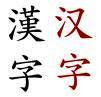
We were discussing this last night and wondering whether the Korean and Chinese translations below the English are as funny-sounding in their respective languages as the English is. I never did learn to read Hangul and don't know enough Korean to make it worthwhile. I can make out some of the Chinese characters (because they are used in Japanese) but China came up with simplications of many of the characters so that they no longer look like the Kanji I learned in Japan.

I hope this post has been of some interest to you, but even if not, I had a blast putting it together! I'll leave you with one last sign from Engrish.com.

Caption on Engrish.com says "This explains the postage due on the toilet paper... "

Yes, this is the sign on the bathroom door. It strikes as funny because the word mailman immediately springs to mind, thus the caption. Japanese Dansei simply means "male."

For some cool pictures and more commentary on the Hakone district around Fuji-san check out this guy's blog, which I ran across while researching this post.